
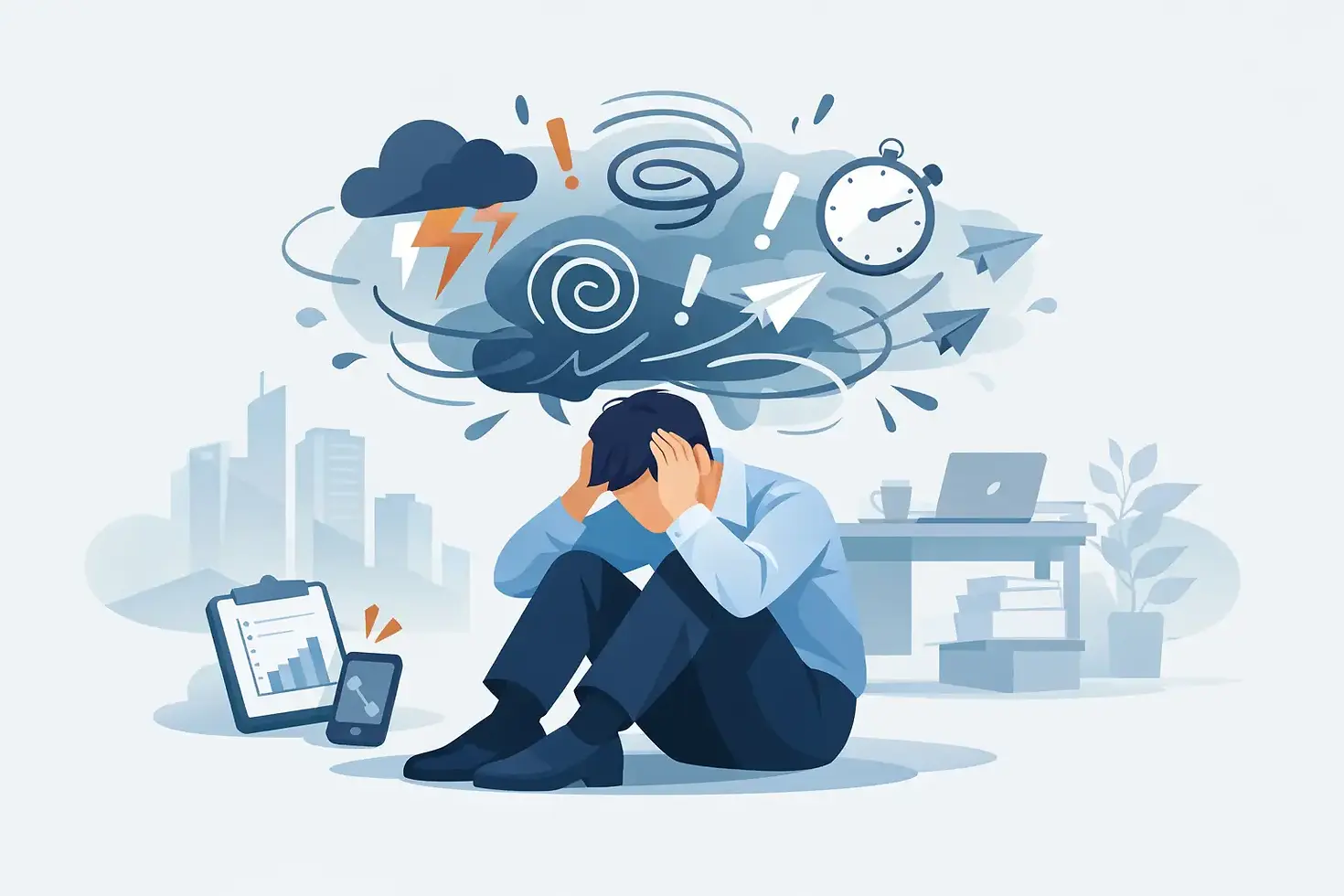
When Stress Related to Anxiety Takes Over

The email has been sent, the shift is over, and the children are asleep. Yet your body still feels as though something urgent is about to happen. Stress related to anxiety can make ordinary responsibilities feel like ongoing threats, leaving you tense, exhausted, distracted, or unable to settle even during quiet moments. This is not a personal failure or a sign that you are not coping well enough. It is often a nervous system that has been working very hard to keep you safe.
For people carrying demanding work, family responsibilities, grief, trauma, health concerns, or major change, anxiety and stress can become so intertwined that it is difficult to know where one ends and the other begins. Understanding that connection can offer a more compassionate place to start.
How Stress Related to Anxiety Can Feel
Stress is a response to pressure. A deadline, financial concern, difficult conversation, or a child who needs extra support can all create stress. Anxiety involves worry, fear, or apprehension that may persist even when the immediate issue has passed. When they occur together, stress can intensify anxious thoughts, and anxiety can make every new demand feel heavier.
This cycle does not look the same for everyone. Some people become restless, irritable, or constantly busy. Others shut down, procrastinate, withdraw from people they care about, or feel numb. A frontline worker may remain highly alert after a difficult call. A parent may replay every decision after a hard day. Someone facing a workplace transition may spend hours anticipating conversations that have not happened.
The physical effects can be just as disruptive. You may notice a racing heart, tight shoulders, headaches, stomach discomfort, fatigue, shallow breathing, changes in appetite, or difficulty falling asleep. Over time, poor sleep and ongoing tension can reduce your capacity to manage the very demands causing the stress.
Why the Cycle Can Be Hard to Break
Anxiety often asks the mind to solve uncertainty before it happens. It may sound like, “What if I make the wrong choice?” “What if I cannot handle this?” or “What if something goes wrong?” These thoughts can feel convincing because they are paired with a real physical stress response.
Avoidance may bring short-term relief, but it can strengthen the cycle. For example, avoiding an email may temporarily lower anxiety, while making the task feel more threatening tomorrow. Reassurance seeking, overpreparing, working past exhaustion, and trying to control every outcome can work in a similar way. These are understandable attempts to feel safe, not character flaws. Still, they can gradually make life smaller and more draining.
Past experiences matter, too. People who have lived through trauma, unpredictable caregiving, discrimination, loss, or repeated high-pressure situations may have learned to scan closely for danger. In high-stress professions, staying alert can be necessary on the job. The challenge comes when that level of alertness follows someone home, into sleep, or into relationships where they want to feel at ease.
Recognizing Your Own Patterns
Rather than asking, “Why am I like this?” it can be more useful to ask, “What is my system trying to protect me from?” That question makes room for curiosity rather than shame.
Consider noticing what happens before your stress rises. Is it a particular time of day, a conflict, a crowded environment, an unanswered message, a memory, or the feeling of being evaluated? Then notice what you do next. You might push harder, withdraw, scroll, overthink, snap at someone, or try to handle everything alone.
It also helps to pay attention to the cost. If anxiety is affecting your sleep, concentration, work performance, physical health, parenting, connection with a partner, or ability to enjoy time off, it deserves care. You do not need to wait until you are in crisis to seek support.
Small Ways to Create More Breathing Room
There is no single strategy that works for every person, especially when stress involves trauma, caregiving demands, or workplace realities that cannot simply be removed. Small, consistent practices can help your body and mind learn that not every moment requires emergency-level energy.
Start by making the next step smaller. If a task feels overwhelming, define an action that takes five or ten minutes: open the document, write one sentence, make one call, or place one item on the calendar. This is not about forcing productivity. It is about reducing the sense of threat that can come with an undefined or impossible-feeling task.
Giving worry a contained place can also be useful. Set aside a brief time to write down concerns, what is within your control, and one realistic next action. When worries return outside that time, gently remind yourself that you have a place to come back to them. This may not stop anxious thoughts immediately, but it can reduce the pressure to solve everything at once.
Your body needs support as well. A slower exhale, a short walk, a warm shower, stretching your shoulders, stepping outside, eating regularly, or putting your phone away before bed are modest actions with real value. For some people, quiet mindfulness feels grounding. For others, especially those who feel activated by stillness, movement, music, or a practical hands-on task may be a better starting point. The goal is not perfect calm. It is to give your nervous system repeated experiences of safety and recovery.
Connection is another protective factor. Anxiety often urges people to isolate because explaining their experience feels burdensome or because they fear being misunderstood. Sharing honestly with a trusted person can interrupt that isolation. You do not have to explain everything perfectly to say, “I have been under a lot of pressure, and I could use some support.”
When Professional Support Can Help
Self-help tools can be meaningful, but they are not meant to place the full responsibility on you. Therapy offers a confidential space to understand what is driving the cycle and to practice new responses with support. It can be especially helpful when anxiety feels persistent, when stress is tied to trauma or occupational exposure, or when it is affecting relationships and daily functioning.
A therapist may draw from approaches such as cognitive behavioral therapy, mindfulness-based strategies, dialectical behavior therapy skills, solution-focused work, or trauma-informed care. The best approach depends on your needs, history, goals, and what feels emotionally safe. Some people benefit from practical tools for worry and emotional regulation. Others need space to process experiences that have made the world feel unsafe. Often, therapy includes both.
For couples and families, anxiety-related stress can show up as conflict, distance, defensiveness, or misunderstandings about why someone seems unavailable or on edge. Support can help create language for what is happening and build more effective ways to respond to one another. Parents may also benefit from a space that recognizes the strain of caring for others while trying to manage their own emotions.
At Dr. Lori Brown and Associates Counselling Therapy, care is grounded in a client-centered, trauma-informed approach. Finding a therapist whose experience and style feel like a fit can make the first step feel more manageable. You remain the expert on your own life; therapy is a collaborative place to make sense of what you are carrying.
A Note About Urgent Support
If anxiety is accompanied by thoughts of harming yourself or someone else, feeling unable to stay safe, or a sense that you cannot get through the immediate moment, seek urgent local crisis or emergency support right away. Reaching out in that moment is an act of protection, not a burden to others.
You may not be able to remove every source of pressure from your life. But you can learn to recognize when stress is asking too much of your system, respond with greater care, and accept support before exhaustion becomes the only signal you hear.


Comments